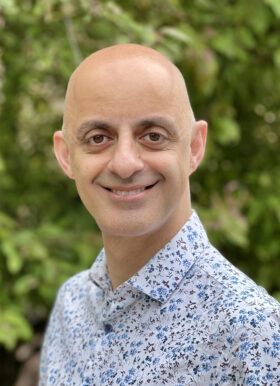
Moe R. Mahjoub, PhD
Associate Professor of Medicine, Division of Nephrology
- Phone: 314-362-5681
- Email: mmahjoub@nospam.wustl.edu
Additional Titles
- Associate Professor, Cell Biology and Physiology
Related Links
Mailing Address
Division of Nephrology
-
Mailing Address:
660 S. Euclid Ave., CB 8126
St. Louis, MO 63110
In the News:
- Mahjoub Lab Celebrates Recent Publications on Critical Role of Centrosomes in Kidney Development and Function
- ASN Kidney Week 2023 Calendar
- Fond Farewell to Drs. Hani Suleiman and Ewa Langner
- ASN Kidney Week 2022 – WashU Nephrology Calendar
Research Interests
My laboratory focuses on the role of the cell cytoskeleton in regulating cell physiology, with specific focus on microtubule-based organelles called centrosomes and cilia. I have been studying these critical cellular structures my entire scientific career, spanning a period of ~19 years. My lab has developed innovative approaches to characterize the critical functions of centrosomes and cilia in mammalian cells, using a combination of transgenic mouse models, as well as in vitro cell culture and organoid systems. Our aim is to determine the consequences of centrosome-cilia defects in the development of human ciliopathy syndromes, with specific focus on renal and pulmonary ciliopathies. My laboratory has identified multiple distinct types of cytoskeletal defects that contribute to the onset and progression of cystic kidney and airway diseases. Our goal is to characterize molecular and cellular processes that are impacted by these cytoskeletal defects, and to identify nodes in pathways that can be targeted for therapeutic purposes.
In addition to research, I have taken an active role in mentoring and leadership positions. I am a long-standing member of the Graduate Student Admissions Committee of the Division of Biology and Biomedical Sciences at WashU. In this capacity, I am intimately involved in development of the graduate student admissions criteria. I am also a member of the Pediatric Centers of Excellence in Nephrology consortium (PCEN-WU) and am involved in training junior scientists as part of the Summer Scholars Program each year. At the national and international level, I have organized and planned sessions for the American Society for Cell Biology, the American Society of Nephrology, the EMBO Centrosome Conference, and the European Cilia Conference. I have reviewed proposals for serval granting agencies including the NIH (USA), the PKD Foundation (USA), the European Research Council (ERC Consolidator Grant Program), the Medical Research Council (United Kingdom), and the Irish Research Council Laureate Awards. I serve on the Science Advisory Panel for the Polycystic Kidney Disease Foundation (USA). Finally, I am the Co-Director of the Washington University Ciliopathy Research Institute, an internationally recognized multidisciplinary team comprised of 16 laboratories that perform fundamental, translational, and clinical research on human ciliopathies.
Publications
Brody SL, Pan J, Huang T, Xu J, Xu H, Koenitizer J, Brennan SK, Nanjundappa R, Saba TG, Berical A, Hawkins FJ, Wang X, Zhang R, Mahjoub MR, Horani A, Dutcher SK. (2025). Loss of an extensive ciliary connectome induces proteostasis and cell fate switching in a severe motile ciliopathy. Science Translational Medicine. 17(783):eadp5173. PMID: 39879322
PMCID: PMC12108131
Langner E, Puapatanakul P, Pudlowski R, Alsabbagh DY, Miner JH, Horani A, Dutcher SK, Brody SL, Wang JT, Suleiman HY, Mahjoub MR. (2024). Ultrastructure expansion microscopy (U-ExM) of mouse and human kidneys for analysis of subcellular structures. Cytoskeleton. doi: 10.1002/cm.21870. PMID: 38715433 Image from manuscript chosen as journal cover.
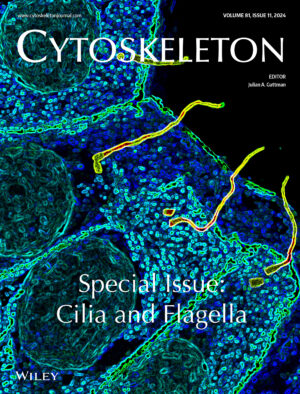
Cheng T, Mariappan A, Langner E, Shim K, Gopalakrishnan J, Mahjoub MR. (2024). Inhibiting Centrosome Clustering Reduces Cystogenesis and Improves Kidney Function in Autosomal Dominant Polycystic Kidney Disease. JCI Insight. 22;9(4):e172047. PMID: 38385746. Image from manuscript chosen as journal cover.

Langner E, Cheng T, Kefaloyianni E, Gluck C, Wang B, and Mahjoub MR. (2024). Cep120 is essential for kidney stromal progenitor cell growth and differentiation. EMBO Reports. Jan(1):428-454. PMID: 38177914.
Cheng T, Agwu C, Shim K, Wang B, Jain S, and Mahjoub MR. (2023). Aberrant centrosome biogenesis disrupts nephron and collecting duct progenitor growth and fate resulting in fibrocystic kidney disease. Development. 150(24):dev201976. PMID: 37066373. PMCID: PMC10104032.
Horani A, Gupta DK, Xu J, Xu H, Carmen Puga-Molina LD, Santi CM, Ramagiri S, Brennan SK, Pan J, Koenitzer JR, Huang T, Hyland RM, Gunsten SP, Tzeng SC, Strahle JM, Mill P, Mahjoub MR, Dutcher SK, Brody SL. (2023). The effect of Dnaaf5 gene dosage on primary ciliary dyskinesia phenotypes. JCI Insight. Jun 8;8(11):e168836. PMID: 37104040.
Mahjoub MR, Nanjundappa NR and Harvey M. Development of a Multiciliated Cell (2022). Current Opinion in Cell Biology – Special Issue on “Cell Architecture”. 77:102105. PMID: 35716530
Liu Z, Nguyen QPH, Nanjundappa R, Delgehyr N, Megherbi A, Doherty R, Thompson J, Jackson C, Albulescu A, Heng YM, Lucas JS, Dell SD Meunier A, Czymmek K, Mahjoub MR and Mennella V. (2020). Super-Resolution Microscopy and FIB-SEM Imaging Reveal Parental Centriole-Derived, Hybrid Cilium in Mammalian Multiciliated Cells. Developmental Cell. 55- 224-236. e6. PMCID: PMC7729880
Nanjundappa R, Kong D, Shim K, Stearns T, Brody SL, Loncarek J, and Mahjoub MR. (2019). Regulation of Cilia Abundance in Multiciliated Cells. eLife. pii: e44039. doi: 10.7554/eLife.44039. PMCID: PMC6504233.
Dionne LK*, Shim K*, Hoshi M, Cheng T, Wang J, Marthiens V, Knoten A, Basto R, Jain S, and Mahjoub MR. (2018). Centrosome Amplification Disrupts Renal Development and Causes Cystogenesis. J. Cell Biology. 2;217(7):2485-2501. PMCID: PMC6028550 *Equal contribution.