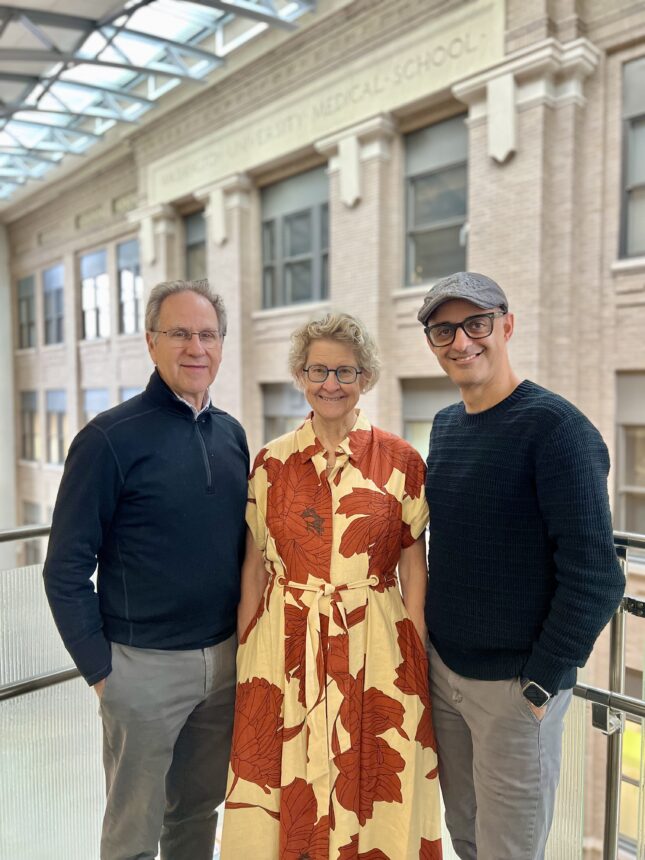
Moe Mahjoub, PhD, Associate Professor in the Department of Medicine (Division of Nephrology) and the Department of Cell Biology and Physiology, has received two newly awarded R01 grants from the NIH, totaling $6.1 million over four years. These awards will support investigations into genetic and acquired airway diseases linked to motile cilia dysfunction. The studies feature a multidisciplinary approach designed to identify and test therapeutic targets.
“We know that motile cilia are very important for airway clearance and lung health,” says Dr. Mahjoub. “Genetic variants or environmental insults that disrupt cilia function can lead to recurrent respiratory infections, bronchiectasis, chronic obstructive pulmonary disease, and asthma, among others. That is why we are trying to understand how ciliary defects cause problems in the airway, so that we can develop new therapeutics for these genetic and acquired airway ciliopathies.”
The first grant, titled Regulation of Motile Cilia Assembly in Lung Disease, is a renewal of an existing R01, now entering its 10th year. This marks the second successful renewal of the WashU project, with Steven Brody, M.D., the Dorothy R. and Hubert C. Moog Professor of Pulmonary Medicine, and Susan Dutcher, Ph.D., Professor of Genetics. The team will continue to determine how cilia are assembled and regulated in the context of genetic lung disease.
“Although motile ciliopathies were thought to be caused by the lack of ciliary motility and the loss of movement of mucus that clears the airway, we found that the inability to dock ciliary proteins properly results in cellular stress, as well as changes in the proteosome and the cell fate,” says Dr. Dutcher.
Studies of the genetic disease affecting motile cilia, known as primary ciliary dyskinesia, have now identified over 60 genes responsible for the condition. “We have discovered that, although the disease features are broadly shared, they are not identical, and some patients have worse disease than others,” notes Dr. Brody. “We are uncovering that the molecular phenotype of each variant differs, leading to important considerations for disease diagnosis and treatment.”
The second R01, Loss of Cilia Maintenance in Acquired and Genetic Lung Diseases, is a newly funded project with Drs. Mahjoub and Brody as MPIs. This study will investigate how cilia maintenance is disrupted in environmentally triggered lung conditions that include COPD and asthma. “In this project, we are focusing more on the basal bodies, the structure that forms the base and supports the assembly of cilia in airway multiciliated cells,” says Dr. Mahjoub. “We discovered that basal body defects are the primary cause of the ciliary defects in these patients, and we are trying to understand how that happens.”
Decreased airway clearance, mucus plugging, infection, and subsequent exacerbation of lung disease are common problems in COPD and asthma. “When focusing on the cilia themselves, the explanation for shorter cilia and slowed cilia beating observed in the airway cells of people with these diseases has been elusive,” says Dr. Brody. “The basal body has been overlooked but may hold the answer to the cause of acquired ciliopathies in common airway diseases.”
Together, these awards reflect a sustained and expanding commitment to understanding the role of motile cilia in respiratory health, with implications for conditions such as primary ciliary dyskinesia and chronic lung disease. The projects involve collaborations with faculty across several departments at WashU, including Drs. Amjad Horani, MD, Pediatrics, Allergy & Pulmonary Medicine; Jennifer Alexander-Brett, MD PhD, Pulmonary Medicine; Michael Vahey, PhD, Biomedical Engineering, and Jeffrey R Koenitzer, MD PhD, Medicine.
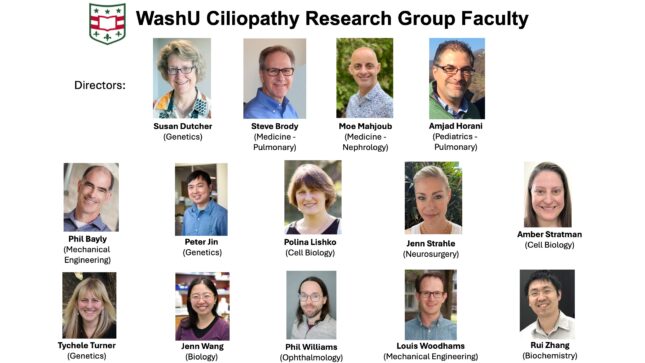
Drs. Dutcher, Brody, and Mahjoub are also co-directors of the Washington University Ciliopathy Research Group, a multidisciplinary team comprised of 14 laboratories that perform fundamental, translational, and clinical research on human ciliopathies.
Explore the fascinating world of cilia on the Mahjoub Lab webpage, where research focuses on defining the roles of the centrosome-cilium complex during organ development and homeostasis. Follow the group’s latest updates on BlueSky: @wu-ciliopathygroup.bsky.social, @mahjoublab.bsky.social, dutcherlab.bsky.social, and @brodylab.bsky.social.