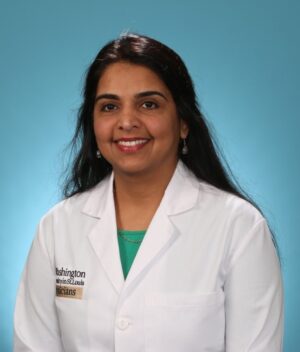
Anuja Java, MD, Associate Professor of Medicine and transplant nephrologist at WashU Nephrology, has been awarded a prestigious research grant from the Foundation for Women’s Health. Her project, one of the foundation’s inaugural $1 million awards, investigates the role of complement system dysregulation in hypertensive disorders of pregnancy, including preeclampsia.
Preeclampsia is a severe pregnancy complication that endangers both mothers and babies by damaging blood vessel linings and impairing their function. If untreated, it can lead to seizures, stroke, and even the death of mother and baby. The condition affects over 4 million women globally each year and remains the leading cause of maternal mortality in the United States, yet its underlying mechanisms are still poorly understood.
Dr. Java’s research aims to uncover how genetic mutations and complement regulators contribute to disease onset.
“This grant is a tremendous opportunity to investigate the role of the complement system in preeclampsia, a condition that threatens the lives of so many women and infants. I am hopeful our work will lay the foundation for earlier diagnosis and new therapies that can save lives. I am very grateful for the support from FWH!”
Anuja Java
A renowned physician-scientist, Java is the Director of Kidney Transplant at the John Cochran VA Medical Center in St. Louis and is an expert in rare complement diseases and kidney damage. In addition to her research, she currently serves as Secretary of the Women in Nephrology (WIN) organization (2024-2026), sits on the Veterans Affairs Kidney Medicine Field Advisory Board where she heads a subcommittee on kidney transplant care for Veterans, and co-chairs the NIH-funded Clinical Genome Resource (ClinGen) Complement Gene Curation Expert Panel (GCEP).

The Foundation for Women’s Health funds groundbreaking studies at leading academic institutions nationwide to address critical gaps in women’s health research. They are building a powerful movement among advocates, donors, and researchers – and creating a pool of private funding – dedicated to advancing women’s health. All board members serve pro bono, ensuring that funds raised go directly to research. Learn more about their first group of grantees here.
Dr. Anuja Java in Our Nephrology News:
- Drs. Leslie Gewin and Anuja Java Attend AAMC Women Faculty Leadership Seminar
- Anuja Java to Lead 2nd USTMA Nephrology Workshop at ASN Kidney Week 2024
- Transplant Nephrologist Anuja Java, Recent ICTS Grant Recipient, is Elected as Women in Nephrology Secretary
- Dr. Anuja Java to Lead Inaugural USTMA Nephrology Workshop at ASN Kidney Week 2023
- WashU Nephrologists Anuja Java and Tingting Li to Share Their Career Decisions at WIN Fellows’ Corner – Should I Subspecialize
- Dr. Anuja Java Highlighted in Inaugural Veterans Health Administration Kidney Newsletter
- Dr. Anuja Java Receives National Kidney Foundation Award of Excellence
- Dr. Anuja Java Appointed to National VA Kidney Medicine Field Advisory Board
Follow @anuja_java on X.